Books I read in June and July
I’m very slowly getting my reading mojo back. 9 books behind on my goal for the year at this point. (Meanwhile, books on my to-be-read lists: 61. I should also be tracking how much that number grows every month.)
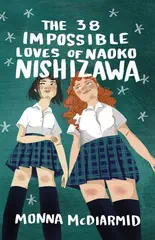
The 38 Impossible Loves of Naoko Nishizawa by Donna McDiarmid - 5/5
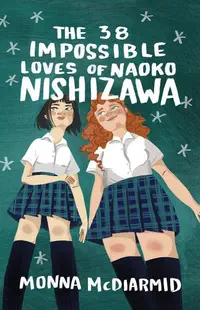
This YA/coming-of-age book is set in an international school in Tokyo. Two students, Akari and Skye, happen upon a journal written by the mysterious Naoko Nishizawa. In an effort to return the journal to its owner, the girls try to piece together Naoko’s life through clues in the text, and along the way they learn about life, friendship, and themselves.
I happen to have the privilege to know Monna in real life through my extended writing community. Among the many hats she wears is life coach, and I’ve even taken one of her classes in that capacity. She is a deep well of kindness, calm, and insight. She is radical compassion personified. And all of that comes through in this book — to the point that it sometimes feels a little unlikely that teenage girls are so self-aware and well-adjusted but it doesn’t matter because the book makes you so happy. It’s like a warm hug from your favorite teacher.
Acceptance: A Memoir by Emi Nietfield - 5/5
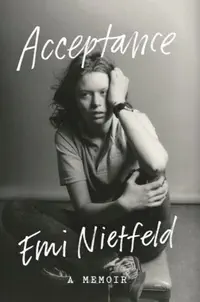
I love a memoir with a double-meaning title. Acceptance tells the story of Nietfield’s journey from homelessness and psych wards, through the Ivy League and ultimately into Silicon Valley. It’s about the gatekeepers she met along the way — from psychiatrists to foster families to college admissions boards — the near impossibility of twisting herself into the forms that they demanded of her, and the hypocritical systems that all but ensured her failure while insisting that they were helping her. And, of course, it’s about coming to radical acceptance of life as it really is, and yourself as you really are.
Breath: The New Science of a Lost Art by James Nestor - 2/5
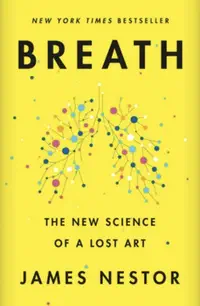
This was a weird one. I love a good self-improvement book, and as a years-long Buddhist-inflected mindfulness practitioner, I’m very familiar the power of “breathwork.” I was expecting to find science-based research about breathing and the autonomic system. I was expecting, basically, Why Buddhism is True (fantastic book) levels of scientific research, but focused specifically on breathing.
That’s not what this was. Though the book has many notes at the back( which I didn’t read because I was too disgusted by the time I finished the book), there were a lot more anecdotes than scientific studies, most of the studies it did reference were dubious — even from the short descriptions of them I could tell they were poorly designed — and all were one-sided. The author mostly follows a bunch of people he calls “pulmonauts,” which means weird fringe characters with outrageous claims about breathing, most of whom come off about as convincing as John Harvey Kellogg and his fixation on masturbation. One of the principle of these “pulmonautic” theories is that oxygen is actually bad for us and carbon dioxide is good for us, and that if we just breathed less all of our health problems would go away and we would live forever. (I exaggerate, but barely.) A large section of the book is dedicated to Wim Hof, taking most of his claims at face value and failing to mention the many studies that have debunked them.
I take issue with the subtitle most of all. The book is really short on “new science” and most of the “lost art” he talks about was only ever “lost” to a narrow subset of people in the west. Nestor spends very little time on the traditional practice of breathwork in the subcontinent and Asia, bringing it up mostly through the point of view of surprised and amazed westerners in the modern era.
It’s really disappointing because I know that there is science to be found here, being done by actual scientists and doctors and not by borderline-cultists and conspiracy theorists.
Dragons of Autumn Twilight by Margaret Weis and Tracy Hickman - 4/5
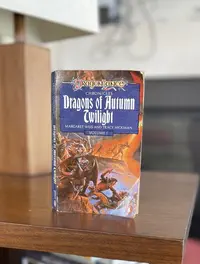
I won’t go into too much depth here because I already talked a bit about this series here, and I plan to review the entire Chronicles trilogy when I’m done with it.
We Are Never Meeting in Real Life by Samantha Irby - 5/5
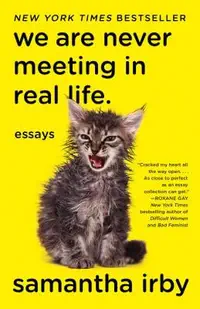
Samantha Irby is fun! She writes about being fat, Black, queer, mentally ill, and feminist, which sounds like it could be a huge downer but it isn’t because of Irby’s humor and infectious joy.
On top of that, she’s almost exactly the same age as me, grew up on the same 90s alternative culture, and unabashedly loves pop culture. Maybe this is where the joy comes in. Or maybe it’s Irby’s capacity to feel and find joy, despite the undeniable and unmitigated bullshit of the world, that allows her to enjoy something dumb and meaningless anyway. (I really wish more of us could deal with the world this way instead of shutting down everything that isn’t perfect, but that’s not a tangent I want to follow right now.)
There’s so much to relate to in Irby’s writing, and the way she finds humor in the even bleakest situations is cathartic in a way that tragedy cannot be. Fortunately she has quite a few other essay collections out that will definitely be going to my TBR list.
