Books I read in March
I got quite a lot of books finished in the first half of March, because I was partway through a lot of things. Then my sister died, and reading got a lot harder.
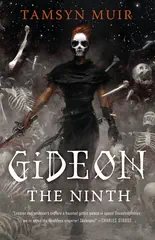
Gideon the Ninth by Tamsin Muir- 5/5
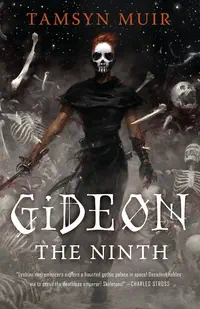
This was a “TikTok made me read it” and I’m so glad it did. It felt a little slow getting off the ground, because so many details about the world are withheld until the end that I couldn’t quite wrap my head around what was going on and it was tiring. But I perservered, mostly because Gideon was so much fun. Looking forward to the rest of the trilogy.
The Man Who Died Twice by Richard Osman- 5/5
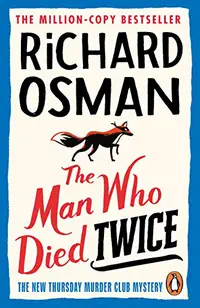
I know Richard Osman from his season of TaskMaster (which, if you haven’t watched it, click that link immediately). Someone recommended his first book, The Thursday Murder Club, to me, and I looked it up online and saw the author photo and said hey it’s THAT guy. These books are exactly what you’d hope from an erudite and hilarious Brit.
The Reason I Jump by Naoki Higashida - 4/5
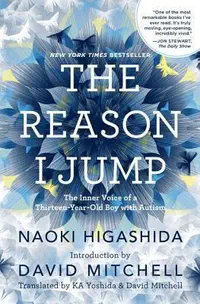
This is a sweet little book with short passages written by a 13-year-old boy with autism. According to the introduction, Higashida is non-verbal (or non-vocal, I guess?) and writes using an alphabet grid that was designed for this purpose. I feel a little bad giving it only four stars, because it is a remarkable accomplishment and I think it’s very important that the book exists. It’s also extremely well-written for a thirteen-year-old of any sort. I didn’t come away with a lot of insight into autism, though–which may just be a sign of how much the world has improved in terms of understanding neurodivergence in the 7 years since it was written.
Electric Idol by Katee Robert - 4/5
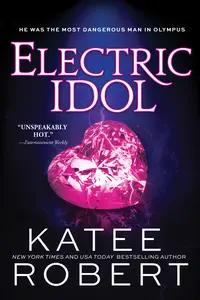
The follow up to Neon Gods, which I read last month. This one focuses on Psyche and Eros. I didn’t like it quite as much as its predecessor, but it was still a fun read. Robert has an amazing knack for writing bad men with little-boy souls, and I’m a sucker for that type. I am getting increasingly confused about the way this world works, though. Like, they’re gods, but they don’t have any godlike powers or magic, except for the force fields that keep them trapped in Olympus, and, like, the rest of the world goes on as normal outside Olympus? Why are they there? Why does Psyche have millions of Instagram followers? Most of those have to be normal people living outside Olympus, right? Is anyone concerned about these non-god gods trapped in this weird mafia world?
How to be Perfect: The Correct Answer to Every Moral Question, by Michael Schur - 5/5
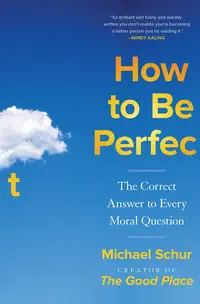
If you liked The Good Place (and, again, if you haven’t seen it, stop reading this right now and click that link) then you will love this book, because it’s everything Michael Schur learned about moral philosophy in the process of writing that show.
Demian: The Story of Emil Sinclair’s Youth - ?/5
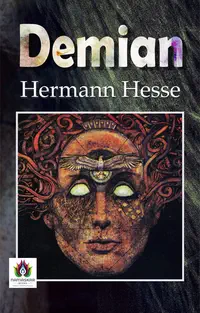
Okay, so, this book. I read it when I was in high school, and I only remembered a little bit about it but I do remember that it had a profound effect on me, and I’ve always thought highly of it. It turns out that reading it as a 45-year-old is quite different than reading it as a 16-year-old, and I can now see how it totally set me up for years of narcissistic abuse by an intellectual boy whom I had deeply confused with Demian, because I was convinced that suffering was the same thing as being interesting. Also, there’s a really slippery slope from the philosophy Hesse is espousing in this book to Ayn Rand’s Objectivism. A really short, slippery slope. So now I’m kind of torn. I have no idea how to rate this book.
