Sewing Bee
Recently I started watching The Great British Sewing Bee, which is just like The Great British Bake-Off/Baking Show except 1) it’s about sewing and 2) you need a VPN to watch it. It’s amateur sewers (or sewists, but I hate that word) competing to make ridiculously complicated things in punishingly short amounts of time, all while being extremely wholesome and British.
I consider myself a pretty good baker, but I would never attempt most of the stuff they make on Bake-Off. Conversely, I consider myself a barely competent seamstress, but watching Sewing Bee makes me think I actually might try some of these things. Because even these extremely good seamsters struggle with sewing in a lot of the same ways I do. Turns out it’s not me. Sewing is just fiddly and frustrating.
Learning to Sew
When I was in high school, we were required to take some sort of “occupational skills” class. I, being the practical but very boring student that I was, took a computer skills class. Everyone else took sewing. I was so jealous! They were making scrunchies and boxer shorts. I was making spreadsheets.
Ever since I was little, I found the idea of making things oneself very appealing. But I didn’t come from a family in which things were made by hand. 1 I had only one living grandparent and she was on the other side of the country, and now that I think about it, she didn’t have a ton of maker skills to pass on anyway. So I was a child who yearned to make things, without anyone to teach me.
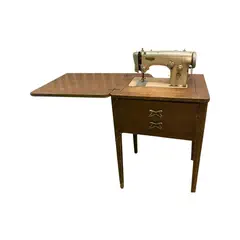
But it turns out that I was WRONG about that, because my mother secretly knew how to sew. I’d never seen her sew anything a day in my life, but we did own a (rather antiquated) Singer. It was a metal behemoth, one of those ones that’s built into a table. When it wasn’t in use, you could flip the sewing machine over so that I was hidden beneath a plain, flat table surface. It’s possible that I didn’t even know it was a sewing machine until I expressed interest in learning and my mother hauled it out.
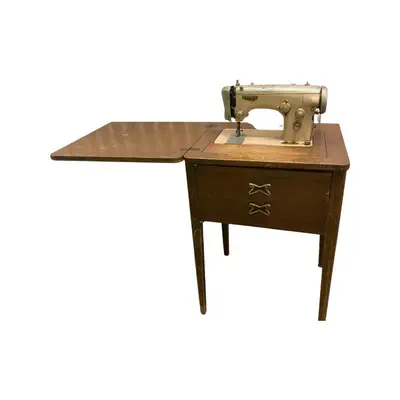
it looked like this
Tragically, it didn’t work anymore.
So she bought me a little lightweight plastic starter machine, and that was what I learned on.
I found sewing incredibly frustrating. Nearly every project I tried involved me giving up in tears, convinced that I was too stupid to figure it out. And I had never felt too stupid to figure anything out in my whole life. Even much later, when I’d taught myself to knit and could construct extremely complicated garments with yarn, sewing flummoxed me. I managed to make a couple of dresses2, one of which I got a lot of use out of, but then I didn’t really pick it up again for a long time.
Returning to Sewing
This year I decided that it was time for me to get over the intimidation and just practice sewing until I was good at it. Back when I was learning, we didn’t have the internet. We didn’t have Youtube tutorials, or printable patterns, or forums where you could ask for advice. It was a whole different world. It’s so much easier to learn things now.
But it turns out that I’d actually learned a lot from my mom. Her sewing knowledge was probably 40 years old when she taught me, but she still remembered a lot. My sewing knowledge is nearly 30 years old, and I still remember a lot, too! Even though I only made a couple of dresses. I know how to read a pattern. I know what grain and bias are and what they’re used for. I know not to use your cloth scissors on paper. It turns out that I actually have all the basics of sewing already under my belt, and I’ve just been too scared to dip my toe into the intermediate end of the pool. So I decided it was time to target and acquire some intermediate skills.
The Pajama Project
Step one: working with stretchy fabric. Never done that. And one thing I’ve learned about myself is that I’d much rather where stretchy fabric than non-stretchy fabric. I live in T-shirts.3 If I’m actually going to wear the stuff I make, there’s going to have to be some stretch involved. But knowing my first attempt was bound to involve some fuckups, I decided to make pajamas, which the rest of the world will never see.
I ordered some cotton jersey cloth online, because I didn’t like any of the options at Joann’s. Again, anticipating fuckups, I didn’t spend very much money, but if I like the way these turns up I can definitely see myself making more sets out of some cool patterned jersey.
Step two: using a pattern I printed off the internet. That really confused me because I’ve only ever used pre-printed patterns you buy in an envelope at Joann’s. 3 How could you print a sewing pattern? They’re big!! Was it just instructions on how to, like, calculate the angles and draw the pattern yourself on a big piece of paper? And they’re on tissue paper so that you can see through them and pin them to cloth. How are you supposed to print on tissue paper using your home printer?
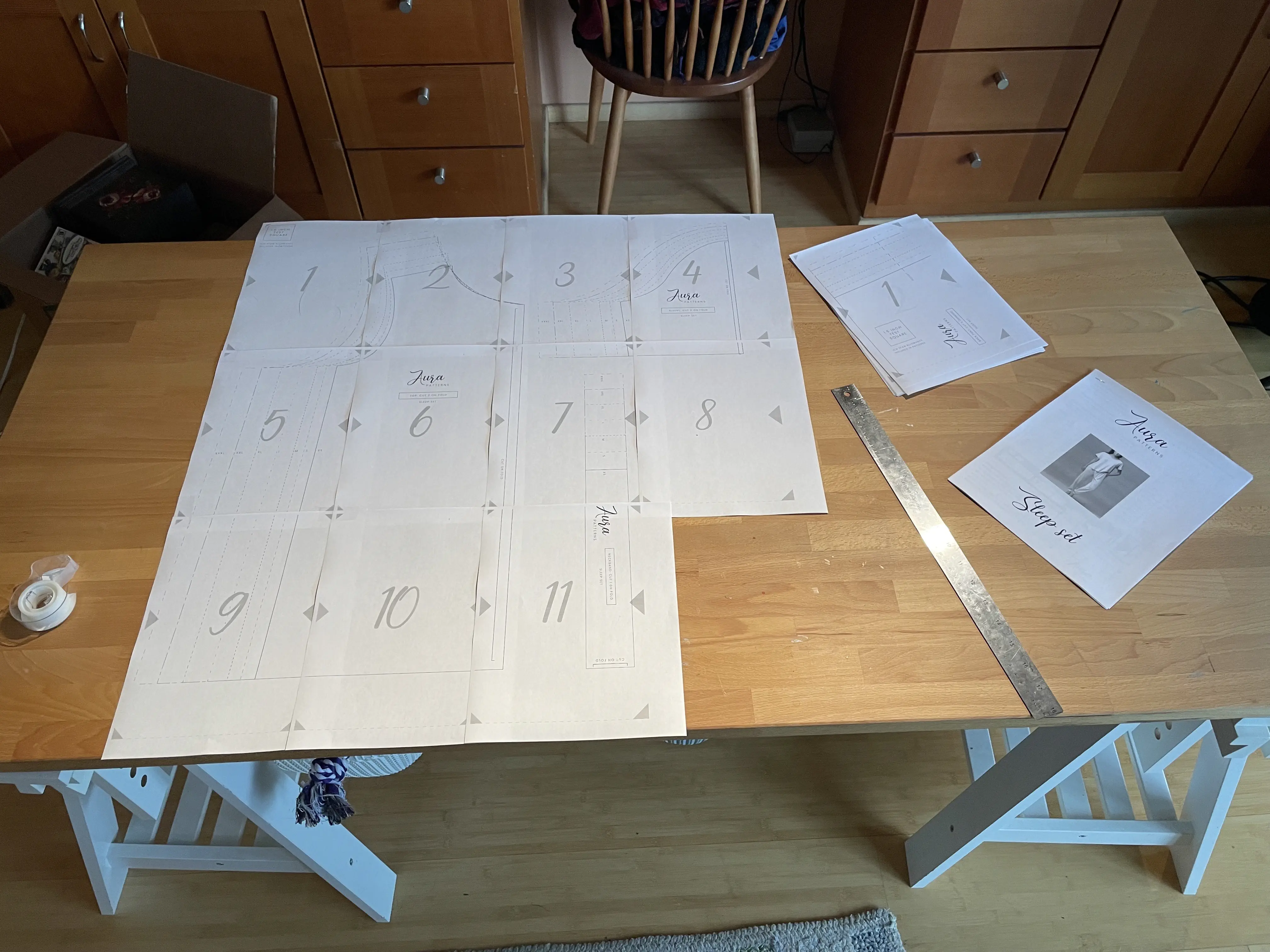
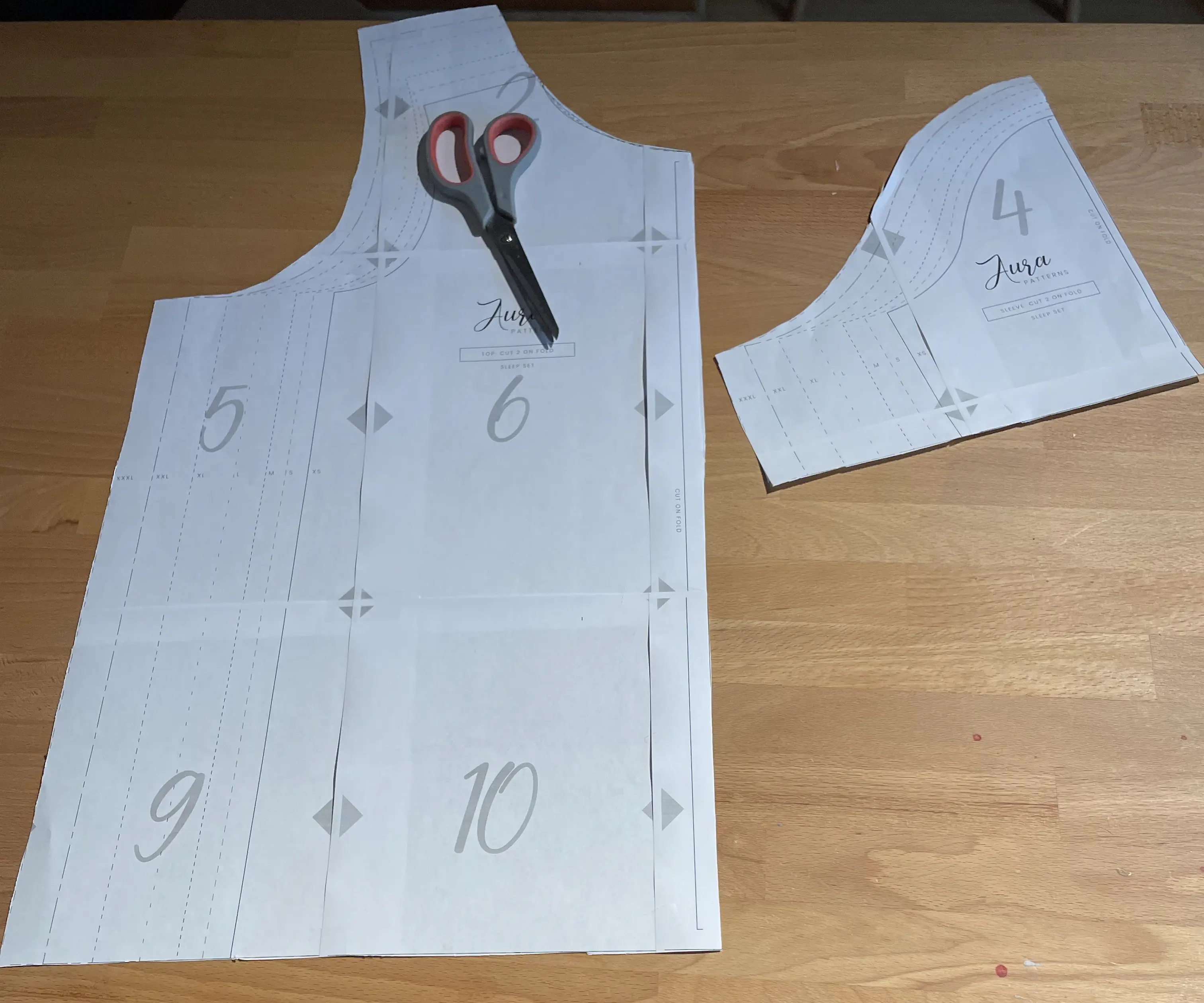
Turns out I was really overthinking it. The pattern is full size, and you print it out on a bunch of pieces of paper and then tape them together to make one pseudo-giant paper. Maybe some people use them like that, but I fortunately had the foresight to buy a big role of pattern paper so that I could trace my pattern onto a thinner, more flexible medium.4

This is the pattern I got from Etsy. It has everything I want in pajamas–loose fit, a scoop neck, POCKETS.
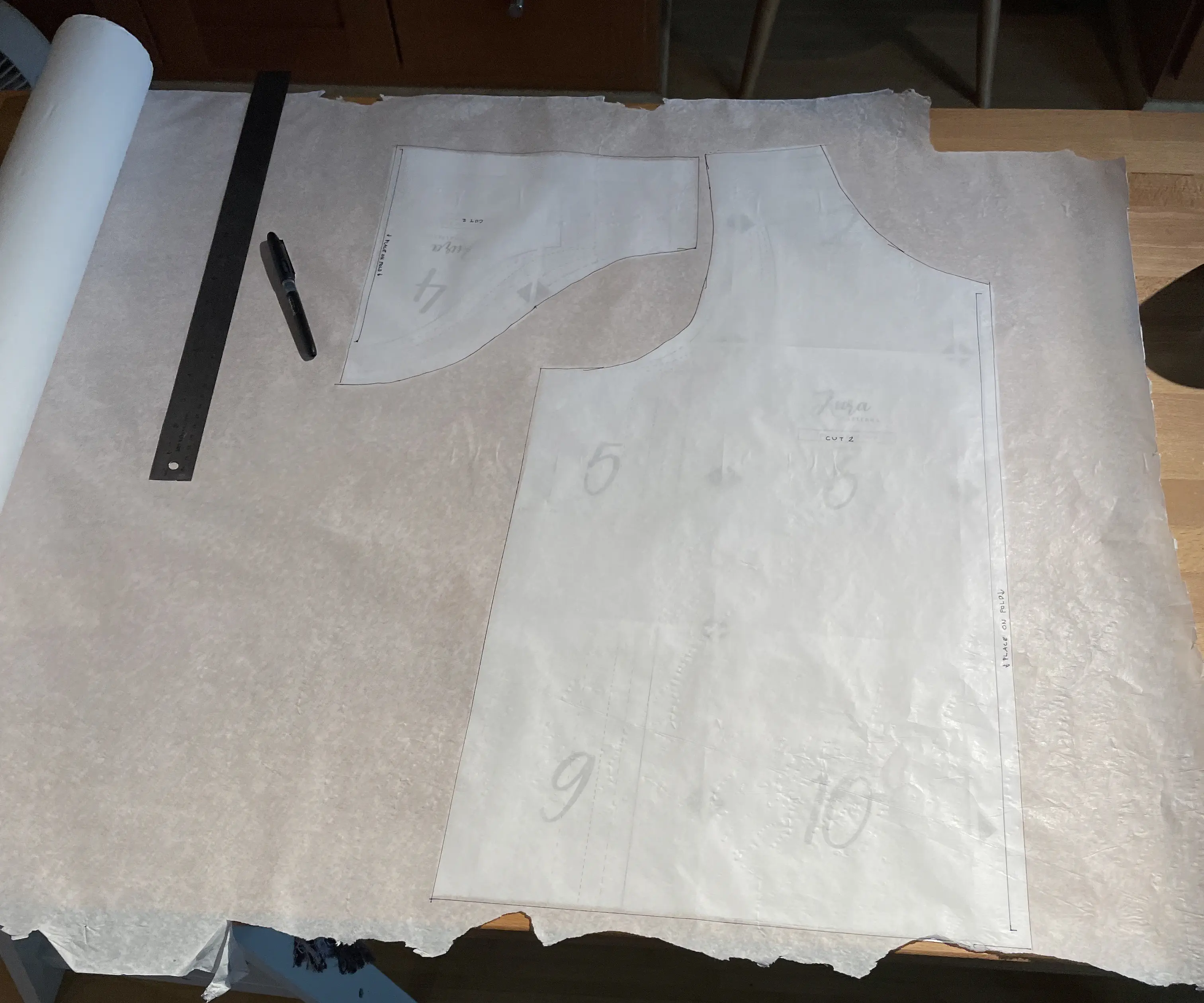
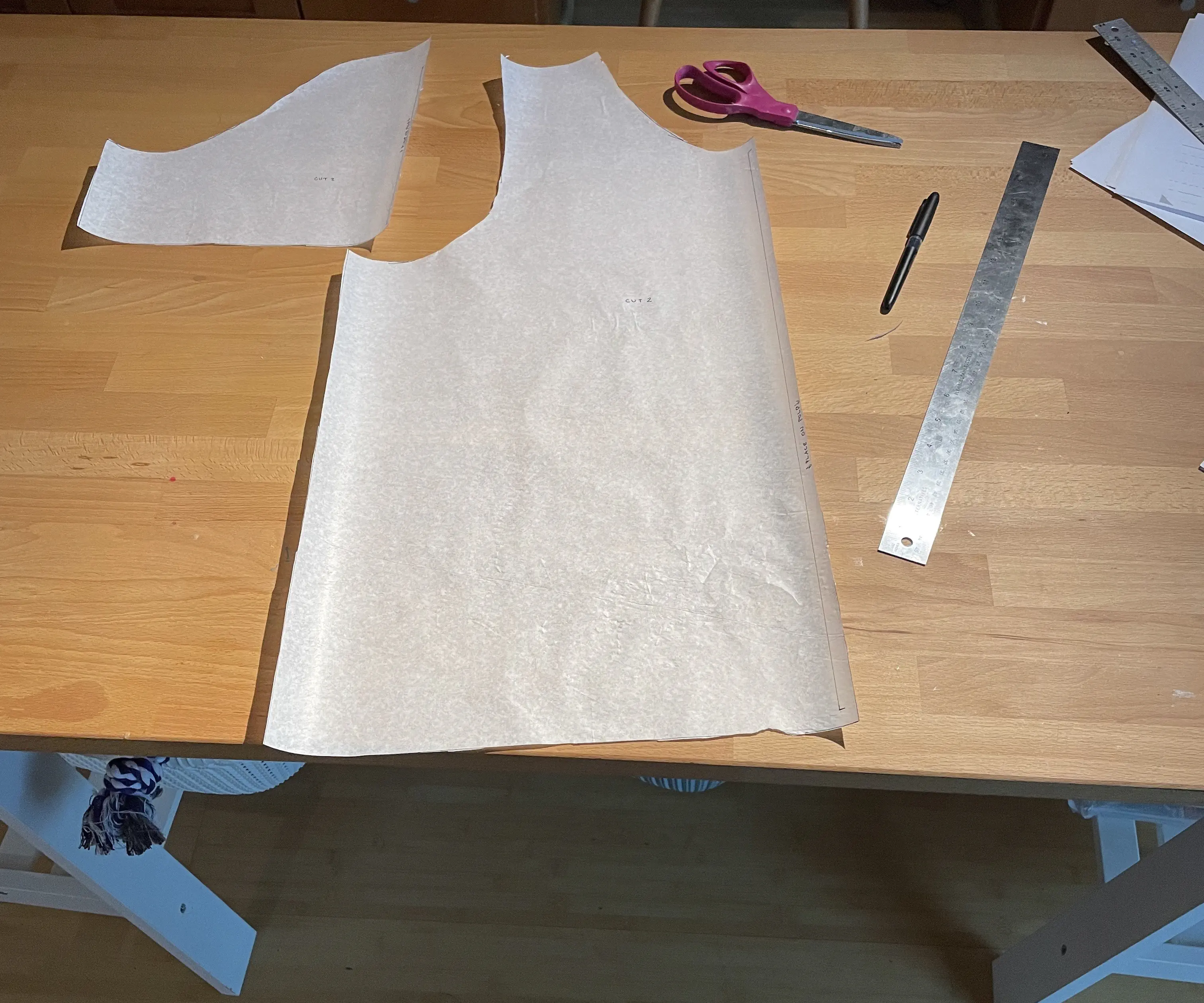
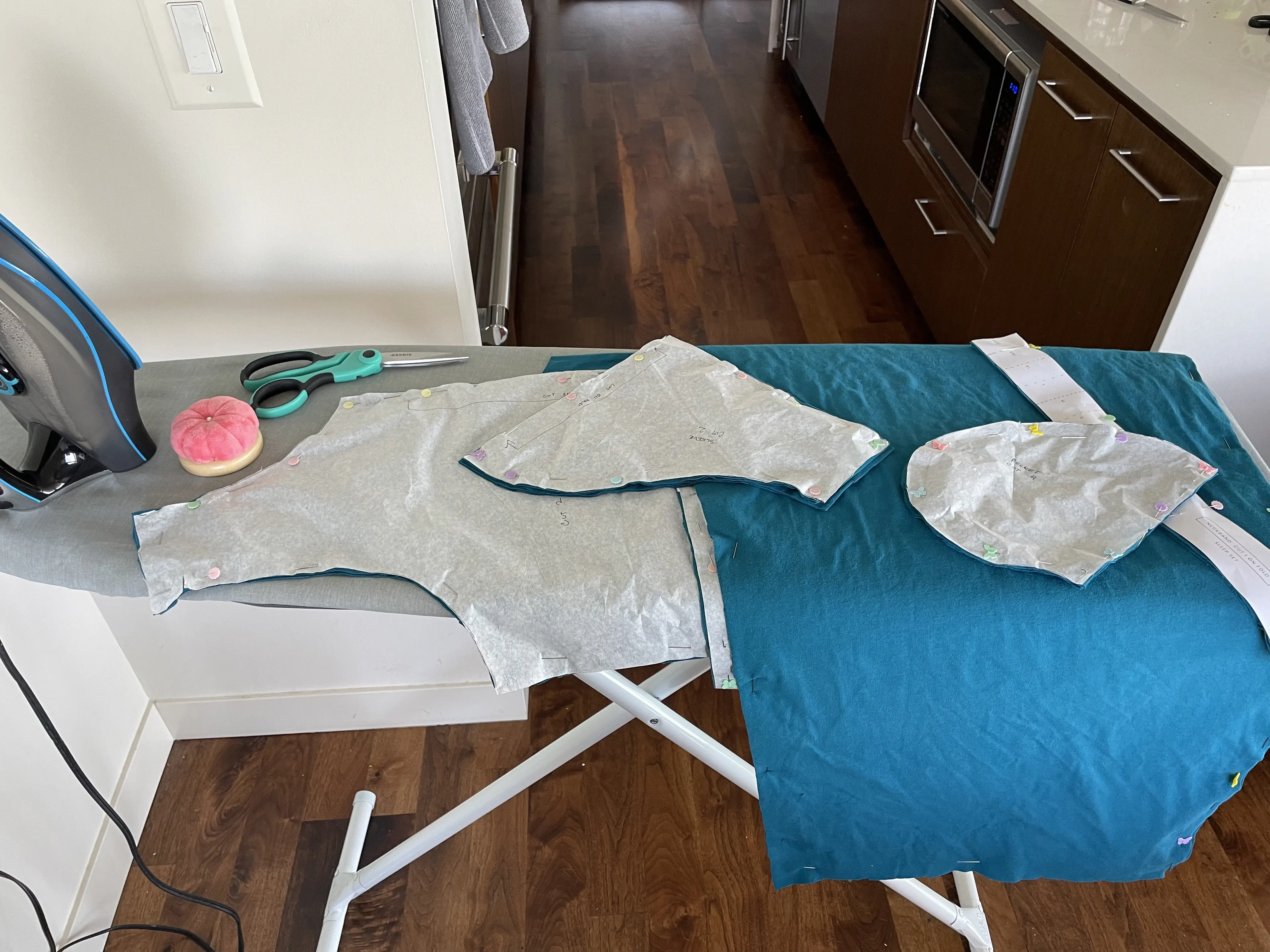
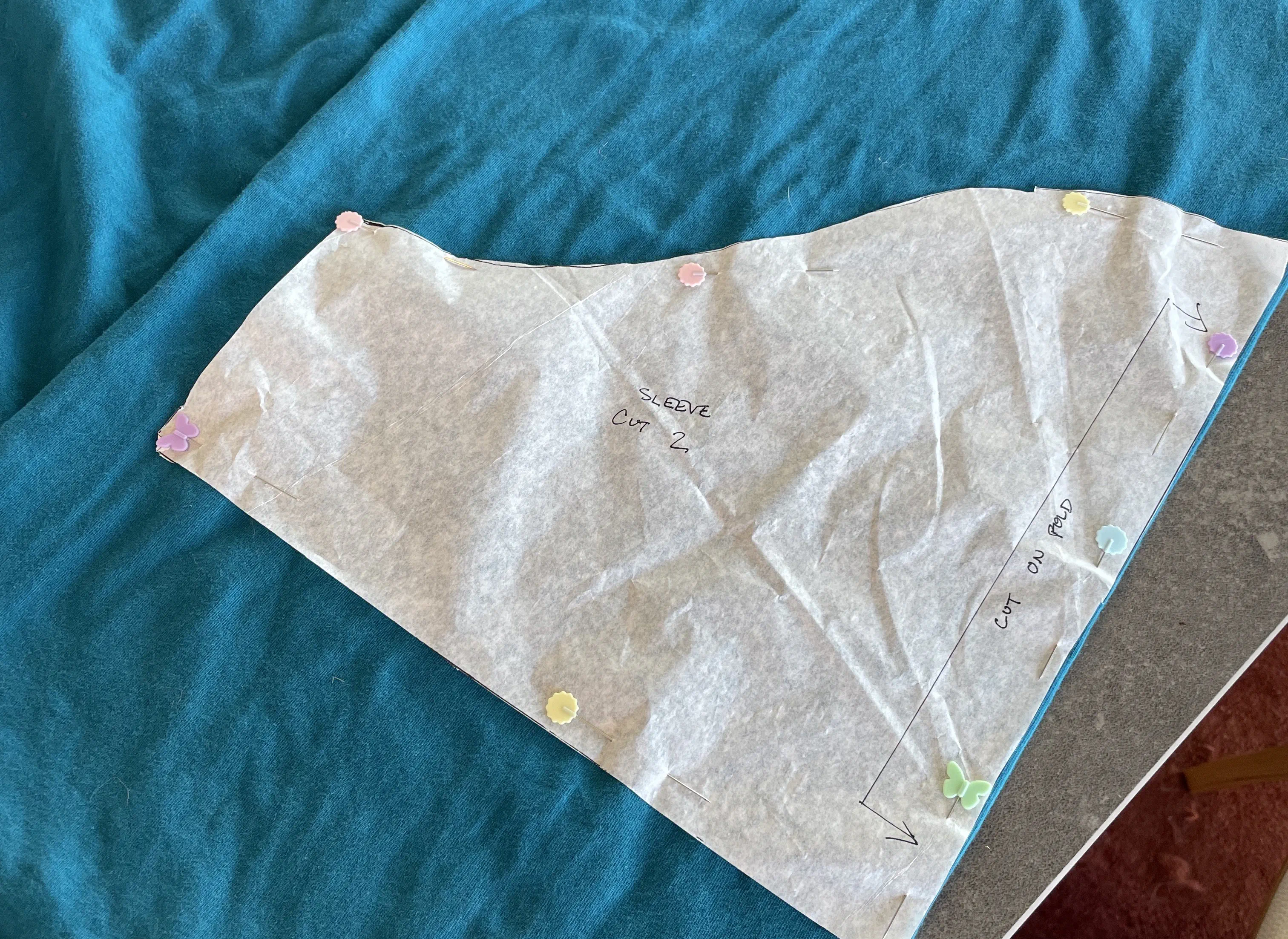
More to come in part 2.
My dad does needlepoint, and he’s really good at it, but to me that’s more of a decorative art and less of a “making” craft. At any rate, I don’t get the same satisfaction from it. Someday I’ll make a post all about my dad’s needlepoint, though, because it’s really cool . ↩︎
A teacher at my high school, who was the dad of one of my friends, complimented me on one of those dresses, and then got extremely flummoxed because he was afraid I would think he was hitting on me. ↩︎
The way it worked was, you would look through giant catalogs of clothes from different pattern manufacturers, and when you saw what you wanted, you’d go look up the code in the filing cabinets. Sort of like a card catalog in reverse. ↩︎ ↩︎
I belatedly realized that I didn’t need to take the extra step of cutting out the paper pattern and then tracing it–I could have just traced it from the taped-together pattern. But whatever. ↩︎
